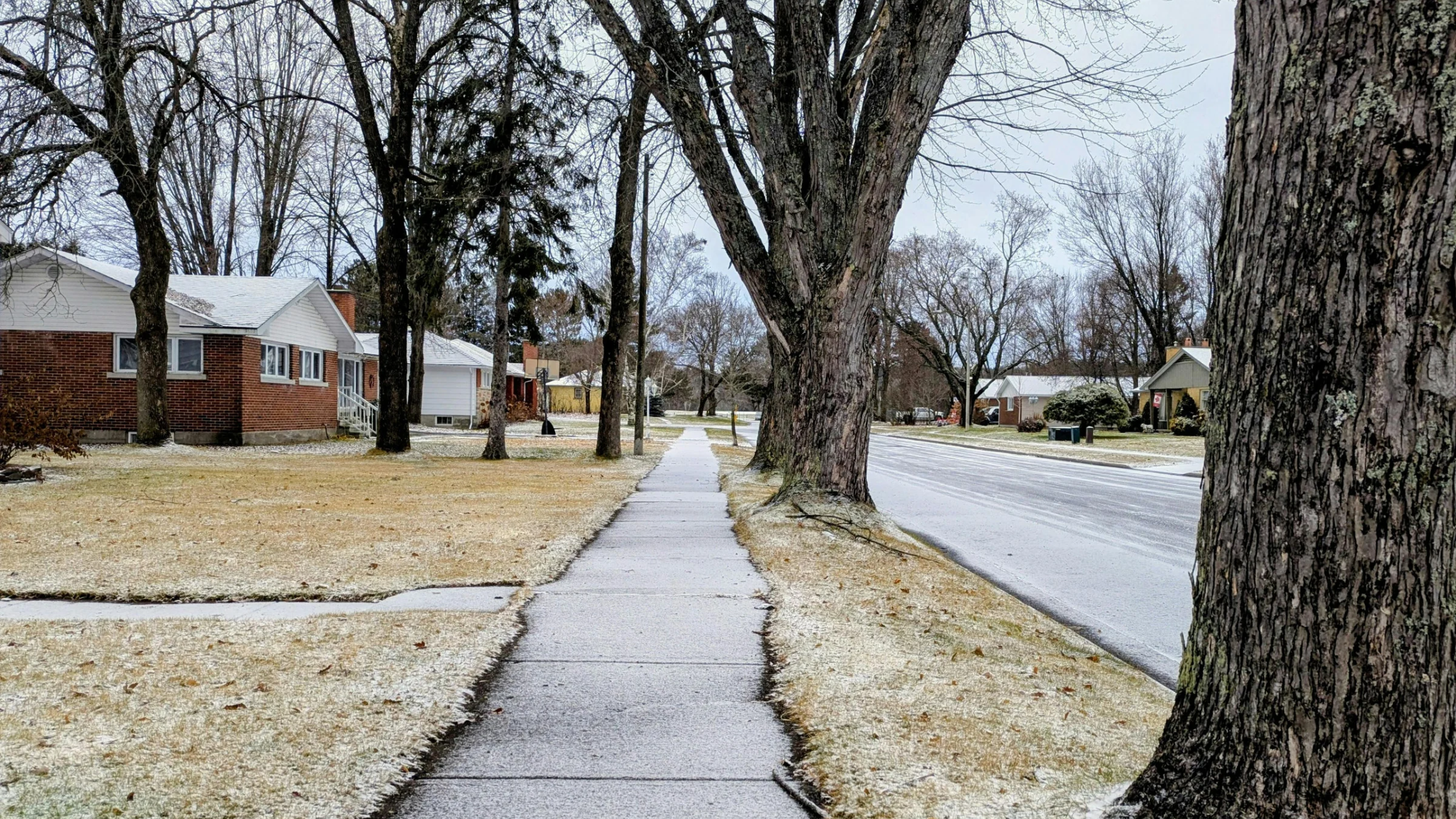
Slipped on Ice in Alberta? Here’s Who May Be Responsible
Alberta winters are long, and a thaw followed by a freeze can turn any sidewalk into a hazard overnight. If you’ve been hurt in a fall on ice, the first question is usually “Whose fault is this?” The answer depends on where you fell, and the rules for a city sidewalk are very different from those for a store parking lot.
Start with the location
Alberta uses two main laws for outdoor slip and falls:
- The Municipal Government Act (MGA) applies to public roads and sidewalks.
- The Occupiers’ Liability Act applies to private property, such as businesses, apartment complexes and commercial lots.
Identifying which one applies is the first step in any claim.
Falls on city sidewalks: a higher bar and a short deadline
Albertans often don’t realize how much the MGA protects municipalities from snow and ice claims.
Gross negligence
Under section 531(1), a municipality is only liable for an injury caused by snow, ice or slush on a road or sidewalk if it was grossly negligent. That is a far higher standard than ordinary carelessness.
A 21-day notice requirement
Section 531(2) requires you to notify the municipality of the incident within 21 days. Miss the deadline and your claim may be barred, although there are narrow exceptions, such as a reasonable excuse for the delay. Calling 311 is generally not enough, so put it in writing.
Protection for inspection and maintenance systems
Section 530 shields municipalities from liability for damage caused by their systems of inspection and maintenance, including how often those inspections happen.
A duty to keep roads in repair
Section 532 requires municipalities to keep roads and public places in a reasonable state of repair. Courts have been working out how this section fits with the protections above. Snow and ice claims still have to clear the gross negligence hurdle in section 531.
The Supreme Court of Canada’s decision in Nelson (City) v. Marchi, 2021 SCC 41 also applies in Alberta. It narrowed which municipal decisions count as protected “core policy” choices, but Alberta’s statutory protections still sit on top of that analysis.
The sidewalk in front of a house
Bylaws in cities like Edmonton and Calgary require homeowners to clear the public sidewalk beside their property. But breaking a snow-clearing bylaw usually isn’t enough, on its own, to make a homeowner liable if someone falls. Courts look for something more, such as control of the area or a condition the owner created.
Businesses and private property
On private property, section 5 of the Occupiers’ Liability Act requires occupiers to take reasonable care that visitors are safe. Claims here are not subject to the MGA’s gross negligence standard or 21-day notice, and the usual two-year limitation period applies.
Your own care matters too
Courts can reduce compensation if an injured person failed to take reasonable care. Footwear, walking pace and awareness of conditions can all be raised in a defence.
What to do after a fall
- Check yourself for injuries and get medical attention.
- Photograph the location, the ice and your footwear.
- Note the date, time and weather, and collect witness details.
- Report the fall. For a city sidewalk, give written notice within 21 days. For a business, tell the manager and request an incident report.
- Speak with a lawyer early, because the deadlines can be unforgiving.
The takeaway
Winning an icy-sidewalk claim in Alberta depends on who controlled the property and how quickly you act. Claims against municipalities face the toughest rules.
If you or a loved one was injured in a slip and fall, contact our team for a free consultation.
Frequently Asked Questions
You must give the municipality written notice within 21 days of the fall. A phone call to 311 generally isn’t enough, so send a written notice and keep a copy. If you miss the deadline, your claim may be barred, apart from narrow exceptions such as a reasonable excuse for the delay.
Possibly, but it’s difficult. For snow and ice on a road or sidewalk, a municipality is only liable if it was grossly negligent, which is a much higher standard than ordinary carelessness. Municipalities are also protected from liability for their systems of inspection and maintenance, so a claim usually needs more than “the sidewalk wasn’t cleared in time.”
Usually not. Many Alberta cities require homeowners to clear the public sidewalk beside their property, but breaking that bylaw generally isn’t enough on its own to make them liable if someone falls. Courts look for something more, such as the owner creating the hazard or having control of the area.
Falls on private property fall under Alberta’s Occupiers’ Liability Act, which requires property owners and occupiers to take reasonable care for visitors’ safety. The gross negligence standard and 21-day notice rule for city sidewalks don’t apply here, but the usual two-year limitation period does. Report the fall to the property manager right away and ask for an incident report.
Disclaimer: This content is provided solely for informational purposes and is not intended for use in any legal proceeding. You should consult a qualified lawyer for advice tailored to your specific circumstances.
